
The Laundry Basket Test
An ordinary trip through the house with a laundry basket can reveal where daily life has become harder than it needs to be, and whether a few changes or a better-fitting home could help.
October 12, 2026Aging in Place5 min read
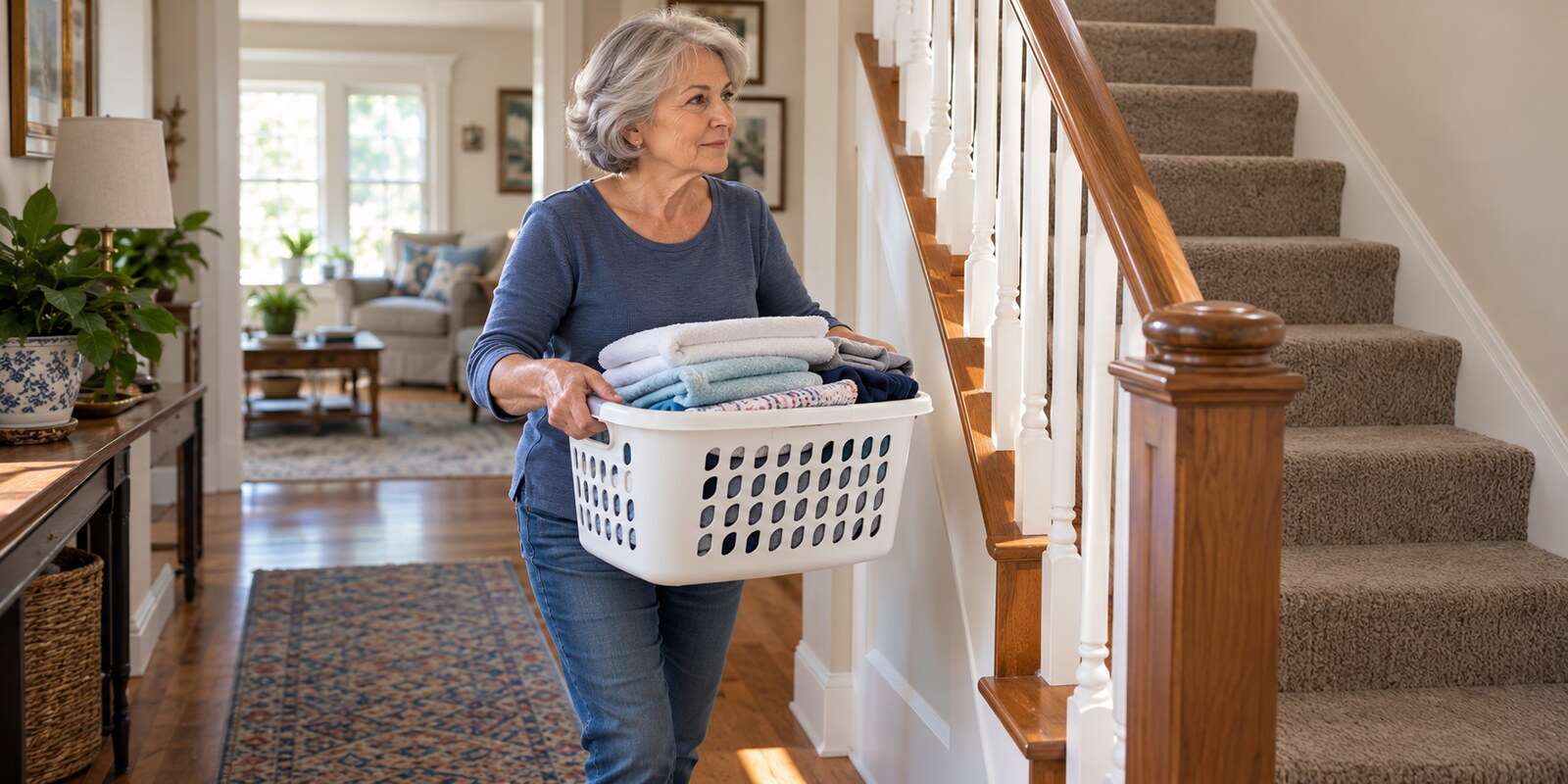
Have you ever stood at the bottom of the stairs with a full laundry basket and wondered why you waited until it was piled so high?
You shift it against your hip, try to keep a towel from falling out and start climbing. By the time you reach the top, you may be thinking that clean clothes should not require this much effort.
It is an ordinary household chore. It is also a surprisingly useful way to notice how well your home still fits your daily life.
Most people do not wake up one morning and suddenly decide their house no longer works for them. The clues usually show up slowly.
The laundry basket feels heavier. The stairs seem steeper at the end of the day. Groceries get left near the door until someone can help carry them. A room that once had a purpose becomes another space to clean.
None of those things automatically means it is time to move. They are simply worth noticing.
Follow the Route
Think about the path your laundry takes through the house.
Does it travel from an upstairs bedroom to a downstairs laundry room? Is there a narrow hallway, a heavy door or a landing where you usually stop and set the basket down?
Do you need both hands to carry it, leaving no hand free for the railing?
Now think about the other things you regularly move through the house: groceries, bedding, the vacuum cleaner, pet supplies and holiday decorations.
These everyday trips tell you more about a home than a beautifully staged room ever could.
Try walking through one normal day and noticing where the house creates extra work. Do not worry about what looks dated or what a future buyer might change. Pay attention to what repeatedly makes you stop, reach, bend, climb or ask for help.
AARP’s HomeFit resources take a similar approach. They look at practical parts of daily life, including laundry areas, stairways, lighting, storage and the possibility of single-floor living.
The point is not that every older home needs a major remodel. Often, a few thoughtful changes can make a home more comfortable for many years.
Try the Small Fixes First
Sometimes the easiest answer really is the best one.
A smaller laundry basket may mean making two lighter trips instead of struggling with one overflowing load. Keeping supplies between waist and shoulder height can reduce unnecessary bending and reaching. Better lighting can make stairs and hallways easier to navigate.
A second hamper upstairs can prevent laundry from piling up. If the layout allows it, relocating the washer and dryer or creating a main-floor laundry area may be worth considering.
These changes are not exciting, but neither is dropping a fitted sheet halfway down the stairs.
Before making structural, electrical or accessibility changes, talk with the appropriate qualified professional. An occupational therapist who provides home assessments can also help identify changes based on the person and the home.
If a few simple improvements make daily life easier, that may support staying in the home you already love.
When the House Keeps Asking for More
Sometimes the laundry basket is only one example.
There may also be stairs to the bedroom, steps at every entrance, a large yard, difficult bathrooms and rooms that are rarely used but still need cleaning and maintenance.
One inconvenience may be easy to solve. Several inconveniences showing up every day may deserve a more honest conversation.
When comparing a current home with a smaller or single-level home, people naturally focus on price, square footage and the number of bedrooms. Those things matter, but I would also think about what an ordinary Tuesday would feel like.
Where is the laundry?
How far do you carry the groceries?
Can you reach the things you use every day?
Is there enough space for the people who actually visit without maintaining rooms that sit empty most of the year?
Would the home still work if you had a temporary injury or needed extra help for a few weeks?
You do not have to make a major decision because carrying the laundry has become annoying. But you also do not have to ignore the small ways a home may be making life harder.
The laundry basket is not the answer. It is simply a good place to start paying attention.
If you are wondering whether your current home could work better with a few thoughtful changes, or whether a different home might fit the life you have now, I am always happy to talk it through. No pressure and no assumption that moving is the answer.
This story provides general educational information about housing, accessibility and planning ahead. It is not medical, construction, legal or financial advice.
Published October 12, 2026. This story discusses real-estate themes in general terms and is not legal, tax or financial advice. It does not describe specific clients or transactions.
One story a week
One story a week, in your inbox
No listings, no market alerts. Just one thoughtful story each week.
One thoughtful story each week. Unsubscribe anytime.
Keep reading

The Next Chapter
The “Tax Lock” Relief: How Orange County Seniors Can Move Without Losing Their Low Property Taxes
Learn how California Proposition 19 may let homeowners age 55 and older transfer a lower property-tax base when moving to another primary residence.
October 19, 2026Financial Readiness6 min read
The Next Chapter
How to Downsize Your Home (One Family's Actual Timeline)
Most guides to downsizing give you a checklist. This is closer to what it really looks like, week by week, for a couple who did it well.
October 5, 2026Downsizing9 min read

Selling OC
What People Get Wrong About Laguna Woods Village
Laguna Woods Village is the largest 55+ community in Orange County, and the part that surprises people is not the golf or the clubs. It is how the homes are owned — and knowing that early makes the whole decision calmer.
September 28, 202655+ Communities5 min read